The Roots of Syrian Culture
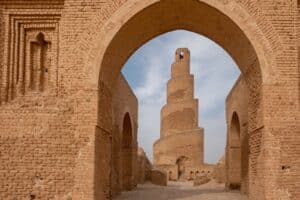
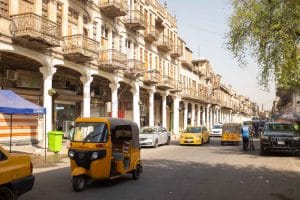
Syria is one of the oldest continuously inhabited places on Earth. For thousands of years, Damascus and Aleppo served as the beating heart of trade routes connecting East and West. Merchants traveling the Silk Road survived thanks to one thing: local hospitality.
That hospitality became more than tradition. It became a survival code, sacred and unbreakable. Islam, Christianity, and Druze communities coexisted for centuries, but hospitality ran deeper than any single religion. It’s what remains when everything else is uncertain.
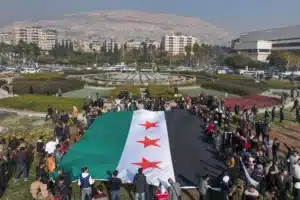
The recent conflict didn’t erase this. It made it stronger. Syrians hold tighter than ever to their traditions, their pride, their warmth. Understanding this is essential before you arrive.
Communication & Behavior
Do’s
✔ Accept hospitality
When someone offers you tea, coffee, or food, accept at least a small amount. Refusal is seen as rejection of the person, not just the offer.
What you get in return: genuine connection, stories you’ll never forget, and the feeling that you were expected all along.
✔ Use your right hand
For eating, passing objects, and handshakes. The left hand is considered unclean.
✔Be patient with time
Schedules can be flexible. Social interactions often take priority over strict timetables.
✔Ask permission before taking photos
Especially with women. A smile and a gesture toward your camera will get you an answer.
✔Remove your shoes when entering
If entering a home or certain religious spaces, you may be asked to remove your shoes.
✔Greet people warmly
“As-salamu alaykum” (peace be upon you) or “Marhaba” (hello) shows respect.
Don’ts
✘Don’t discuss politics or the recent conflict
Even well-intentioned comments can hurt. Avoid unless your guide brings it up first.
✘No public displays of affection
Even between married couples. Keep it private.
✘Don’t point the soles of your feet at people
It’s insulting. Watch your leg position when sitting.
✘Don’t enter religious sites without permission
Wait for your guide’s instructions.
✘Never photograph military, checkpoints, or government buildings
This is dangerous and can lead to detention or confiscation of equipment.

Dress Code
What You Should Wear
✔Women
Long sleeves, long skirts or pants, headscarf (mandatory in mosques, recommended everywhere). Loose-fitting, neutral colors.
✔Men
Long pants always. Cover shoulders in religious sites.
What you get in return: access to ancient mosques, warm welcomes, and respect that opens every door

Food Etiquette
Do’s
✔Eat with your right hand
The left is considered unclean for eating.
✔Leave a little on your plate
Empty plate means you want more. Leave some to show you’re satisfied.
✔Respect bread
Never waste it. If it falls, pick it up. Bread is sacred.
✔Compliment the food
Show appreciation. It reflects respect for your host.
Don’ts
✘Don’t eat raw or undercooked meat
Avoid tartare or pink meat.
✘Don’t eat salads or raw vegetables in rural areas
May be washed with unsafe water.
✘Don’t drink tap water
Quality varies even in cities.
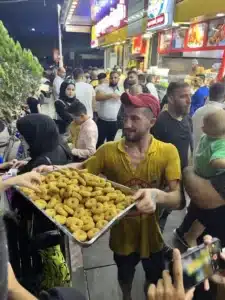
✘Don’t consume street food that’s been sitting out
Avoid anything not freshly cooked.
✘Don’t have dairy unless pasteurised
Some local dairy is unpasteurised.
✘Don’t try seafood far from major rivers or reputable restaurants
Low turnover increases risk.
✘Don’t ignore your gut feeling
If it looks unclean, skip it.
What to Bring
- Passport (keep it with you always)
- Cash in USD
- Headscarf for women
- Modest, loose-fitting clothing
- Copy of your visa
- Your guide’s contact information
A Final Note
Syria demands more from you than typical destinations. You’ll dress conservatively in the heat, adjust to a different sense of time, and pass through checkpoints. In exchange, you’ll be invited into homes within hours of arriving, walk streets older than most countries, and experience hospitality that most travelers will never encounter.
Ready to experience it?
Check our upcoming Syria tours, please don’t hesitate to get in touch.